Since the abolition of the British “non-dom” status, one figure keeps circulating: Switzerland is said to have welcomed 3,000 millionaires in a single year. An investigation into a widely repeated, rarely verified figure — and into the real destination of that wealth, which isn’t the one everyone assumes.
On 24 June 2025, a press release was enough to revive, for the umpteenth time, the debate over the exodus of Britain’s wealthy. A London-based consultancy, Henley & Partners, announced that in 2025, 16,500 millionaires would leave the United Kingdom — its largest net loss ever recorded in ten years of tracking. On the other side of the ledger, Switzerland appeared as one of the big winners of the movement, with an announced net gain of 3,000 millionaires.
The figure made its way around the global financial press, from Bloomberg to Forbes. It also began to circulate in a more local, less verifiable version: one of a rush on Geneva and Zurich, presented as the two Swiss capitals of this new British wealth.
The number that started it all
It all starts in April 2025: the United Kingdom abolishes the “non-domiciled resident” (non-dom) status, which for more than a century had allowed wealthy residents to pay UK tax only on income remitted to the United Kingdom. The new, less generous regime immediately gave rise to a narrative of capital flight — largely fuelled by the annual report from Henley & Partners, co-produced with wealth intelligence firm New World Wealth.
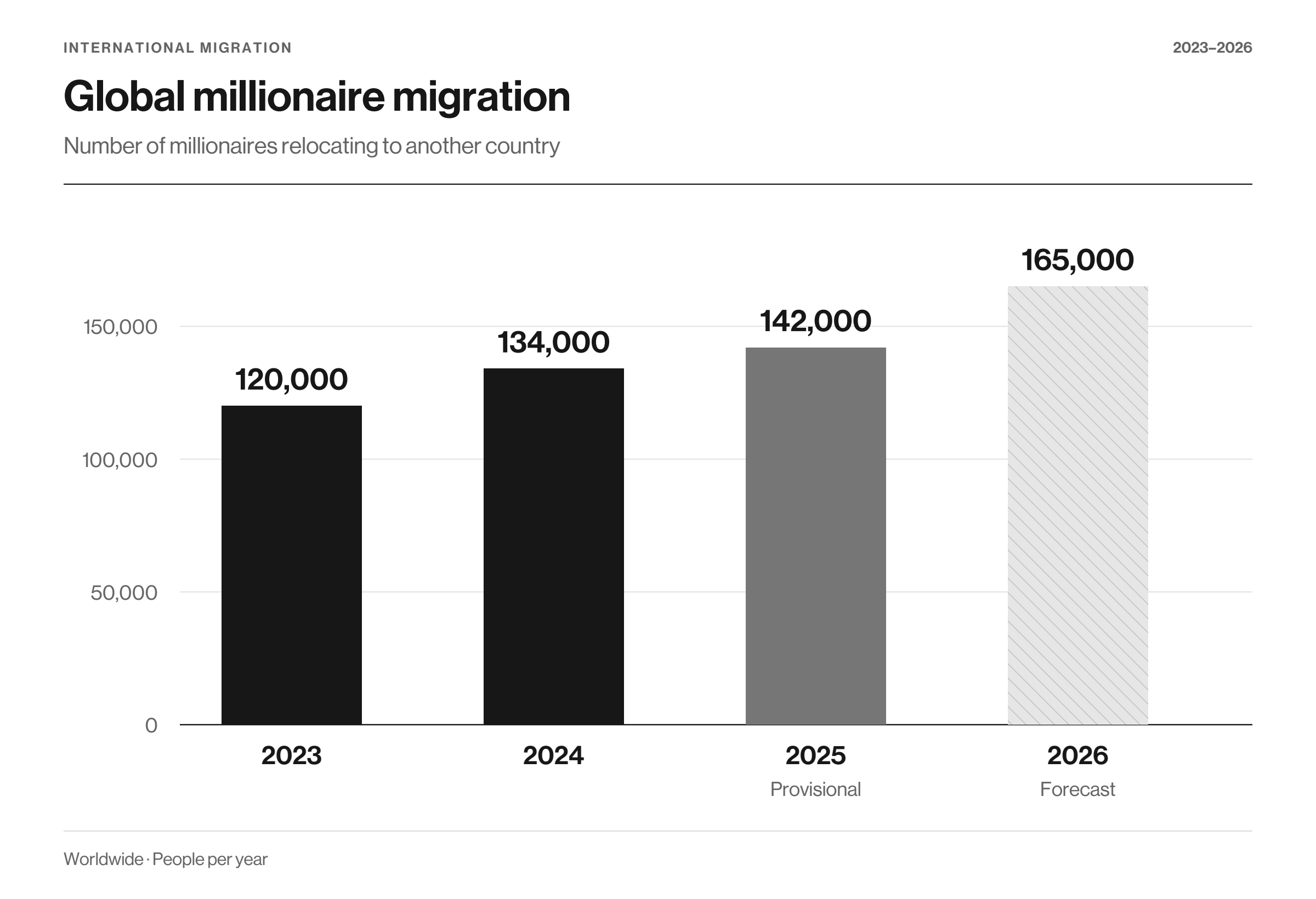
According to that report, 142,000 millionaires — people holding at least one million dollars in liquid, investable assets — changed country of residence worldwide in 2025, a record after 134,000 in 2024 and 120,000 in 2023. The firm projected a further acceleration to 165,000 for 2026.
Where millionaires are going (and fleeing) in 2025
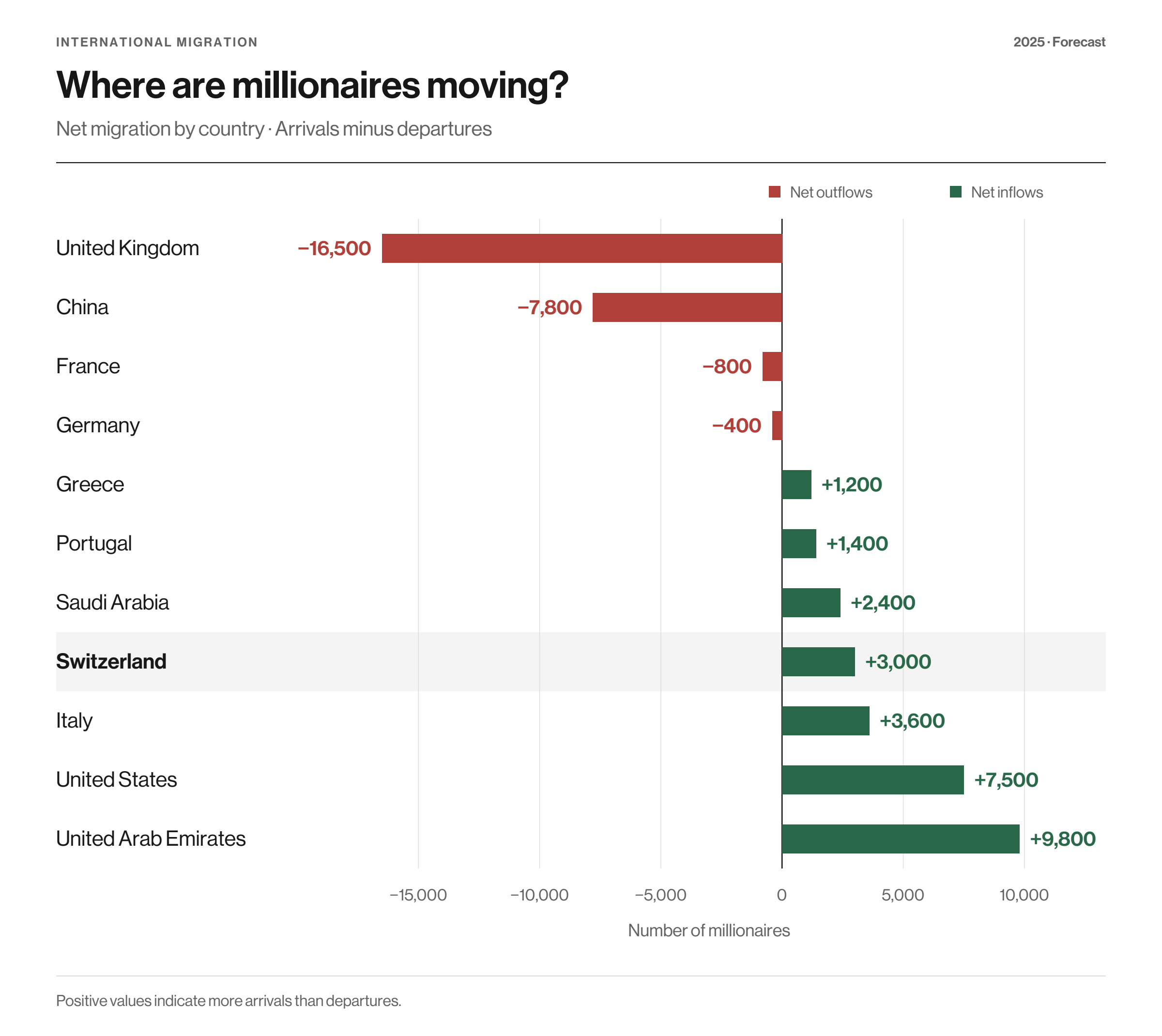
Fig. 2 — Net balance of millionaires by country, 2025 (provisional). Source: Henley Private Wealth Migration Report
Key figures 2025
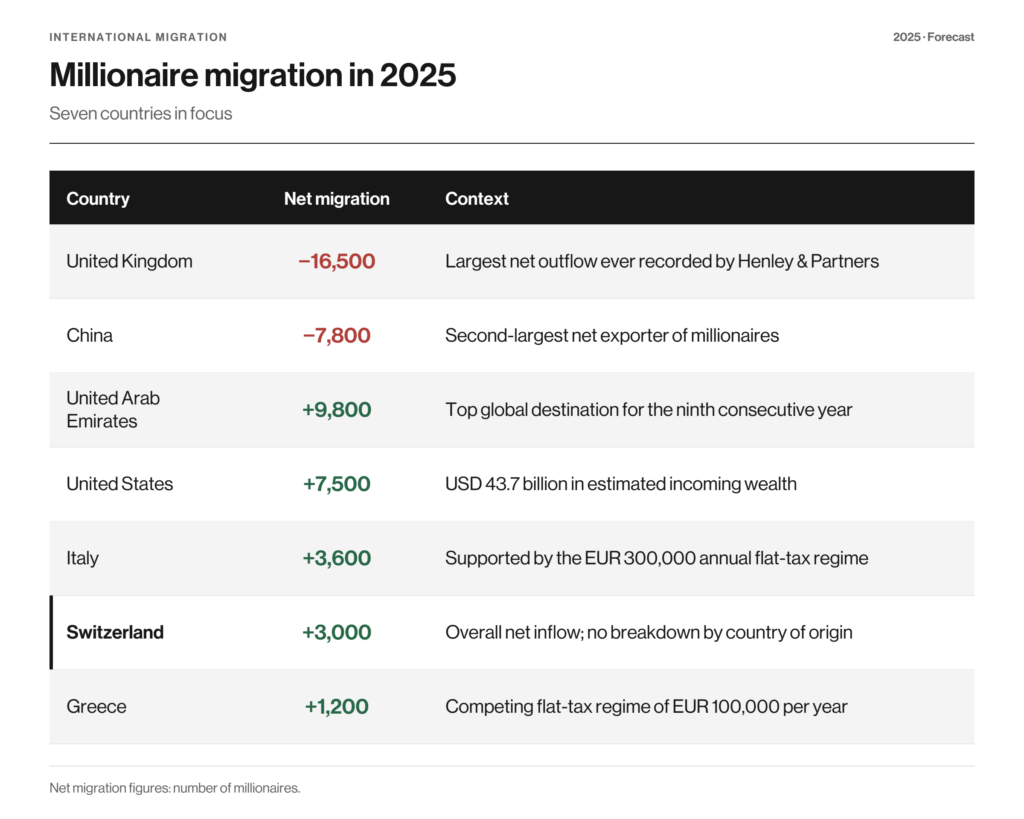
Source: Henley Private Wealth Migration Report 2025 (Henley & Partners / New World Wealth). Provisional figures — see the section on their reliability, below.
Geneva, not Zurich: what federal statistics show
This is where the story, as it’s often told, goes off the rails. Zurich keeps coming up in articles about wealthy Britons arriving in Switzerland — understandably enough, since the city is home to the country’s largest financial centre. But on this specific point, the official figures tell a very different story.
The measure took effect in January 2010. Basel-Stadt, Basel-Landschaft, Schaffhausen and Appenzell Ausserrhoden followed suit shortly after. The direct and well-documented consequence: nearly half of Zurich’s lump-sum taxpayers left the canton in the years that followed. For fifteen years now, Zurich simply no longer offers the tax regime that attracts wealthy foreign individuals without gainful employment elsewhere in Switzerland — the very people the non-dom comparison is about.
The latest available federal figures, for 2022, leave little room for doubt: The canton of Valais leads with 841 lump-sum taxpayers, followed by Ticino (725) and Vaud (706). Geneva, with 520 taxpayers, ranks fourth — well ahead of Grisons (195) and Zug (157). Zurich does not appear in this ranking at all: it has deliberately excluded itself since 2010.
Taxpayers under lump-sum taxation, by canton (2022)
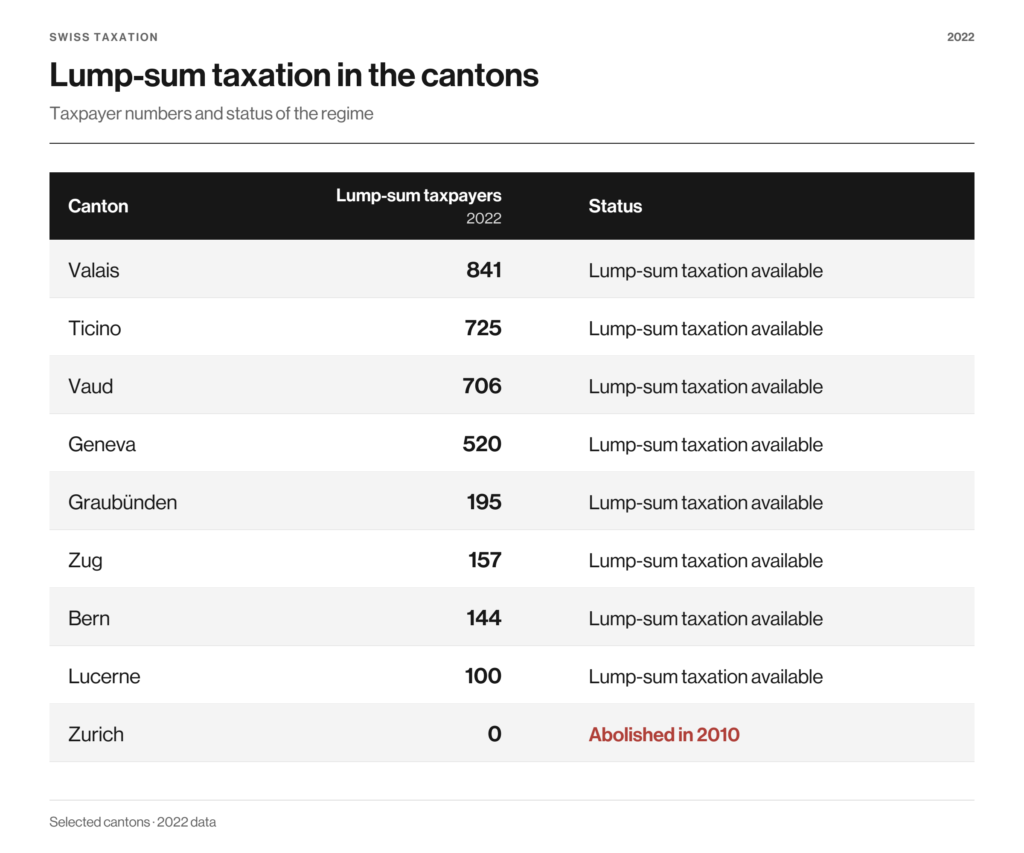
Source: Federal Tax Administration (latest available data), as reported by Blick, 2026.
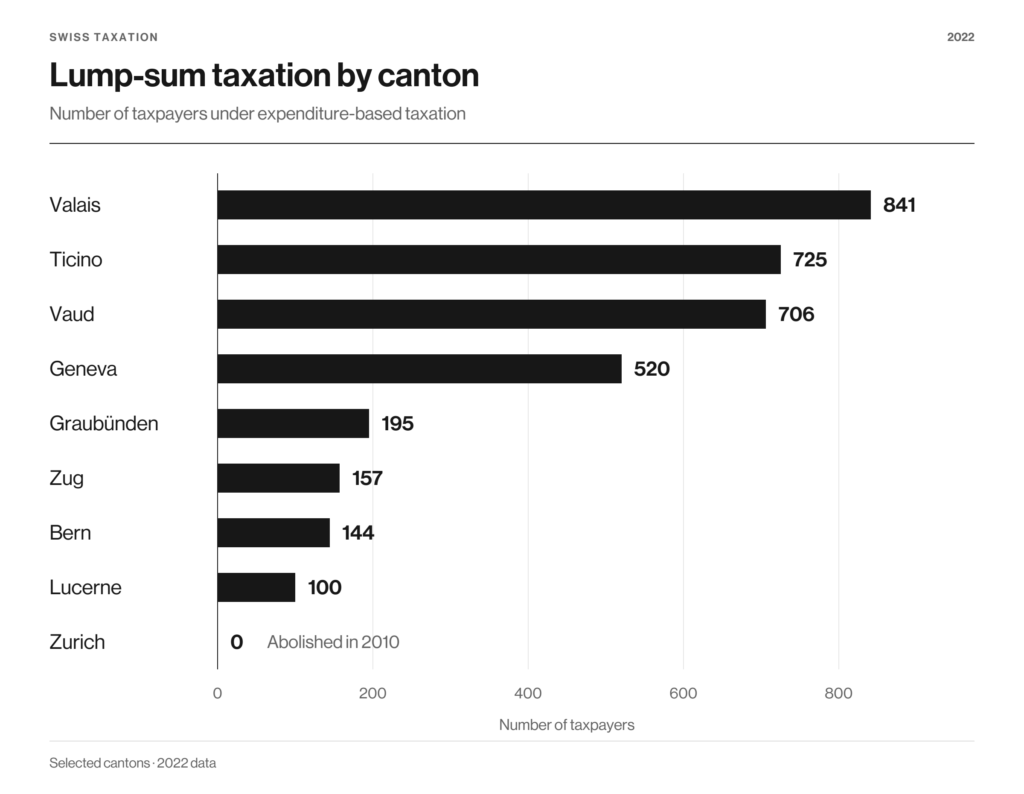
Fig. 3 — Taxpayers under lump-sum taxation, by canton (latest federal data, 2022). Source: Federal Tax Administration, as reported by Blick.

Misam GHADIALI
Chairman