
Just ten years ago, talking about “longevity” in a five-star hotel would have raised a smile. Today, it has become the central selling point for an entire segment of the travel industry. And in this trend, one name keeps coming up: Chenot.
A method developed fifty years ago that has evolved into the science of healthy aging
The group is by no means a newcomer, however. It all began in 1974, in Cannes, when Henri Chenot opened his first Espace within the city’s general hospital.
The original idea was simple—and almost radical for its time: aging is not an inevitable biological process but the result of a series of choices, accumulated toxins, and a lifestyle that can be corrected. Fifty years later, this insight has evolved into a method in its own right, the Chenot Method®, which combines precision medicine, traditional Chinese medicine, and high-end hospitality.
Advanced diagnostics, proprietary biomarkers, cryotherapy at -110°C, and epigenetic profiling: program by program, the brand has built a scientific framework for healthy aging that goes far beyond the traditional spa experience.
International growth achieved without diluting the brand
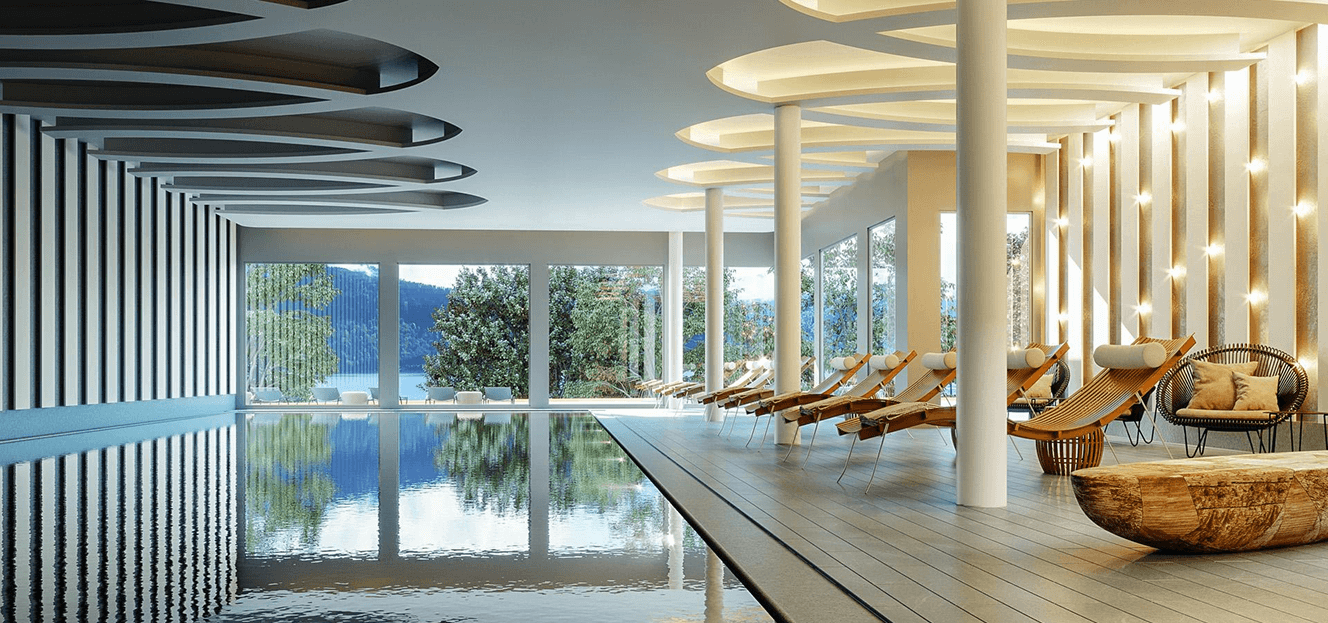
What is most striking is how this expertise has spread geographically without ever losing its essence. The Chenot Palace in Weggis, on the shores of Lake Lucerne, and the one in Gabala, Azerbaijan, remain the group’s two flagship properties—destinations in their own right designed for immersive wellness programs lasting at least one week.
But it is primarily through the more flexible “Espace Chenot” concept—hosted within partner establishments—that the brand is expanding: L’Albereta in Italy, the Selman in Marrakech, and the One&Only Portonovi in Montenegro, the result of a global partnership with the ultra-luxury One&Only chain, which has since expanded as far as Malaysia.
Each location retains the medical and diagnostic framework of the method, while adapting it to the local climate, culture, and clientele. It is precisely this ability to integrate into existing establishments without losing its identity that explains the group’s international growth in recent years.
SIZE: Chenot as a lever for wealth creation
It is in this context that SIZE, a partner of the Doğuş Hospitality and Retail Group, now describes Chenot as a unique player in the world of heritage hospitality.
For SIZE, the brand no longer merely sells a wellness experience: it serves as a genuine value-enhancing asset for the hotels that host it. A property that incorporates a Chenot Espace or Palace is not merely capitalizing on its image; it transforms the very nature of its real estate assets by integrating a medical and scientific dimension that is difficult to replicate—and therefore rare in the market.
This uniqueness, according to SIZE, is precisely what sets Chenot apart from the many spa brands that have proliferated in the luxury hotel industry: you’re not just renting a room with spa access; you’re investing in an asset whose value appreciates thanks to a holistic, sustainable, and hard-to-copy health concept.
From a focus on rest to a focus on recovery
This focus on well-being is part of a broader trend. The travel industry is shifting from a focus on relaxation to a focus on healing.
Customers are no longer just looking to “get away” for a few days; they want to leave with data on their biological condition, a concrete action plan, and sometimes even a measured and improved cellular age. This demand is driven by a generation of older, more informed travelers, as well as by working professionals in their forties and fifties who reject the idea of linear decline.
Chenot anticipated this shift well ahead of the curve by building a narrative around the twelve biological mechanisms of aging and positioning its approach not as a one-time luxury, but as a lifestyle to be maintained between stays, through its own product line.
The hotel of tomorrow: A place to learn to age differently
Living longer—and, above all, living better
At a time when life expectancy is increasing faster than healthy life expectancy, concepts like Chenot’s address a very concrete need: to live longer, certainly, but above all to live better.
And it is undoubtedly this promise—more than mere hotel comfort—that is shaping the future of travel today.
Misam GHADIALI
Chairman