
It’s an idea we’ve vaguely sensed for years without always being able to articulate it clearly: a successful restaurant or a hotel that draws crowds can drive up the price per square meter in the surrounding area.
Behind this intuition lies a mechanism well understood by real estate and hospitality professionals: a location’s ability to attract people ultimately determines its property value. The starting point seems almost trivial. The conclusion, much less so.
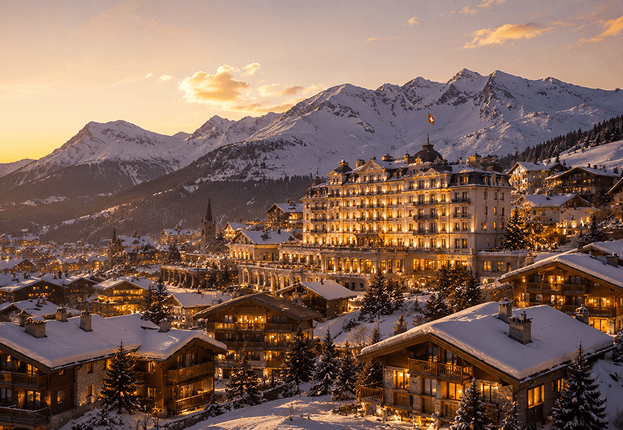
Put the church back in the center of the village
The expression “putting the church back in the center of the village” takes on its full meaning here. For centuries, the village center was structured around the church, the hub of social and economic life. The farther one moved away from it, the less valuable the land became. Today, that role has simply taken on a new form: restaurants, hotels, and cafés now serve as the center of gravity.
The problem is that, starting in the late 1990s, many property owners sidelined the hospitality industry in favor of major retail chains, which were considered more creditworthy and capable of paying higher rents. This was a miscalculation: if these chains were willing to pay such high rents, it was precisely because the neighborhood’s appeal had already been established by the restaurants, cafés, and hotels that were there before them.
Take them away, and the street empties out. The value chain is almost brutally simple: where there is life, there is demand; where there is demand, there are gathering places; and these gathering places are, for the most part, hospitality businesses.
Megève: A Case Study
The example of Megève illustrates this phenomenon well. There are, in a sense, two Megèves: the one before the Four Seasons arrived, and the one after. Since the luxury hotel group set up shop, real estate values in the resort have skyrocketed, as if the Four Seasons’ presence had “validated” the destination in the eyes of buyers and investors.
Today, one of the factors determining the price of a chalet in Megève is no longer just its proximity to the village center, but its proximity to the Four Seasons itself.
This logic underlies the entire line of reasoning: the hotel industry does not merely occupy a location; it transforms it into a destination, and this transformation comes at a price, which directly impacts the value of surrounding real estate.
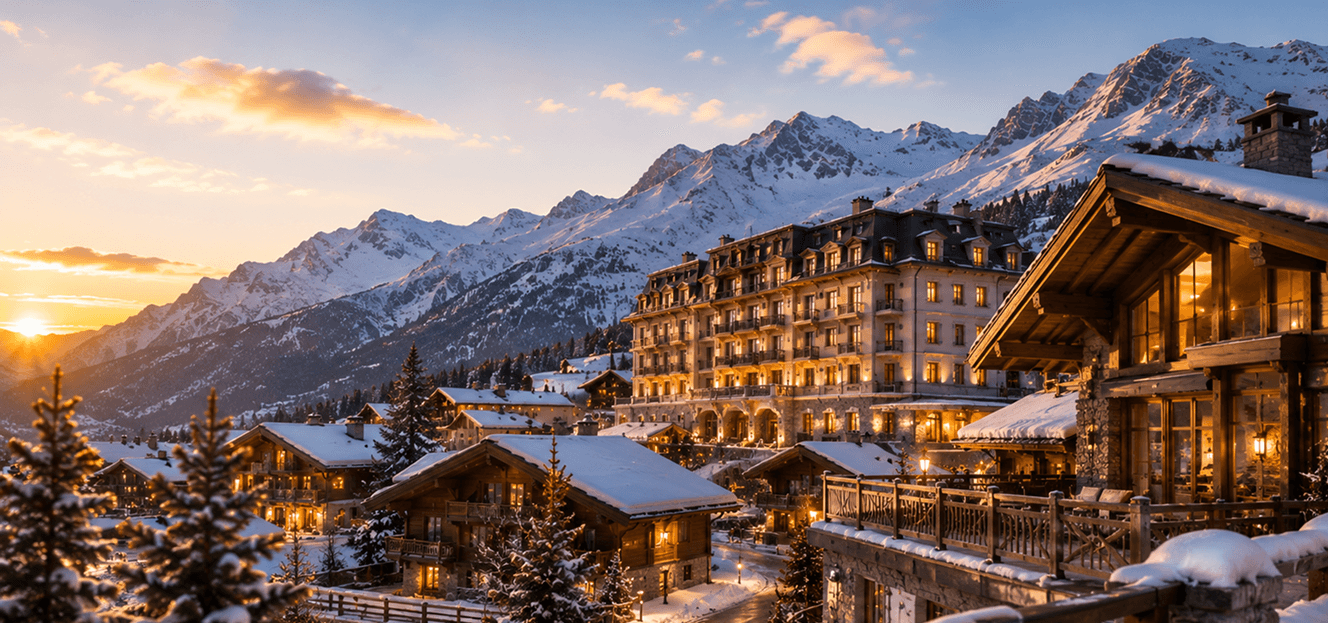
This is confirmed by the figures
The data supports this intuition. A study by CBRE shows that residential neighborhoods located near areas with a high concentration of restaurants, bars, and wellness services see their real estate prices rise by 15 to 30 percent compared to comparable areas that lack these amenities.
In Miami Beach, the proliferation of luxury hotels and renowned restaurants has contributed to price differences of up to 30% compared to areas with less hotel development. The same logic applies in Dubai’s DIFC business district: remove the many restaurants that bring it to life, and property values would drop significantly.
Well-being as the New Standard of Desirability
One particularly telling mechanism involves well-being as a driver of value creation. The Swiss example speaks for itself. Weggis, a small village on the shores of Lake Lucerne, has become a destination in its own right since the Palace Chenot opened there.
The mechanism is the same as in Megève, but applied to health rather than skiing: a medical spa, longevity programs, and a scientific reputation built over several decades are enough to transform the perception of a place—and thus its property value.
We see the same spirit in the business model of restaurants like Zuma, Coya, and Amazonico, which alone can justify higher rents in the residential complexes that house them, or in the event spaces at resorts like D-Maris, designed to attract a clientele willing to pay for an experience rather than simply renting a square meter.
Brands That Become Selling Points in Real Estate
A simple equation, but one that changes the way we think about real estate
Essentially, the reasoning can be summed up in just a few words: where there is life, there is value. But behind this almost simplistic statement lies a true paradigm shift for investors and developers.
The hotel industry is no longer a secondary activity tucked away on the ground floor of a real estate project just to make the sales brochure look good. Increasingly, it is becoming the main driving force: it attracts the first visitor, who then attracts businesses, which in turn attract residents or investors willing to pay more to live next to what brings the neighborhood to life.
This is undoubtedly the most striking conclusion: in the real estate of tomorrow, the question is no longer just where to build, but what to build around it—and with whom.

Misam GHADIALI
Chairman