
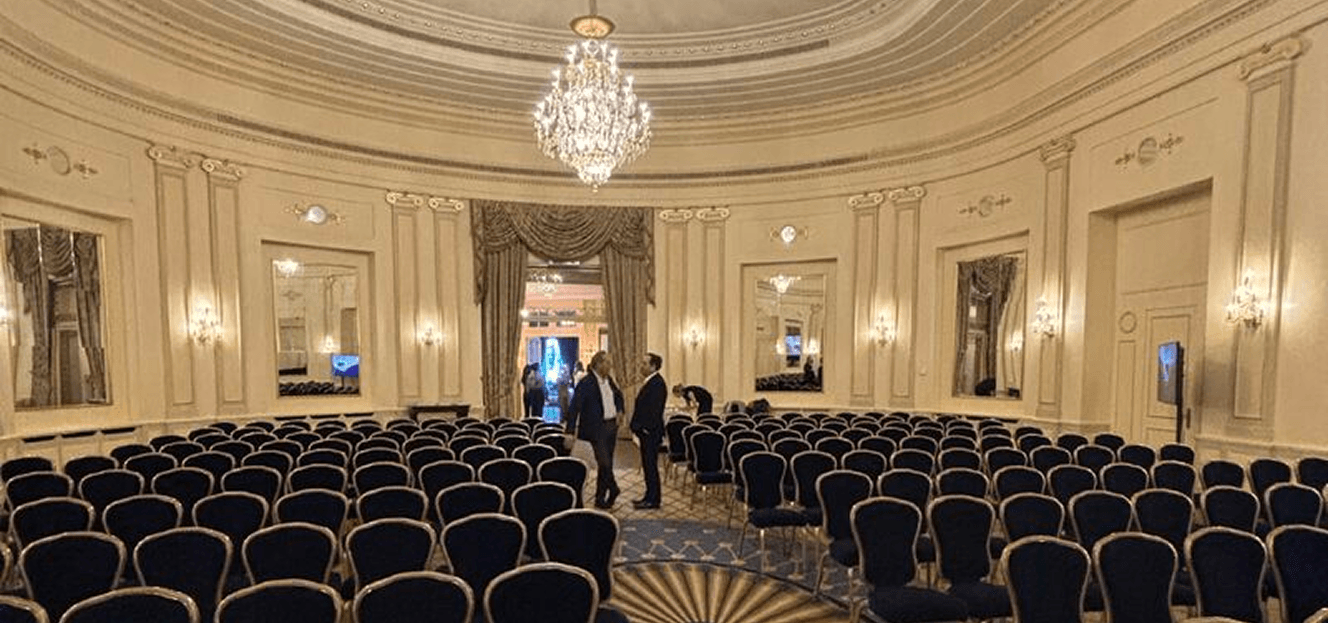
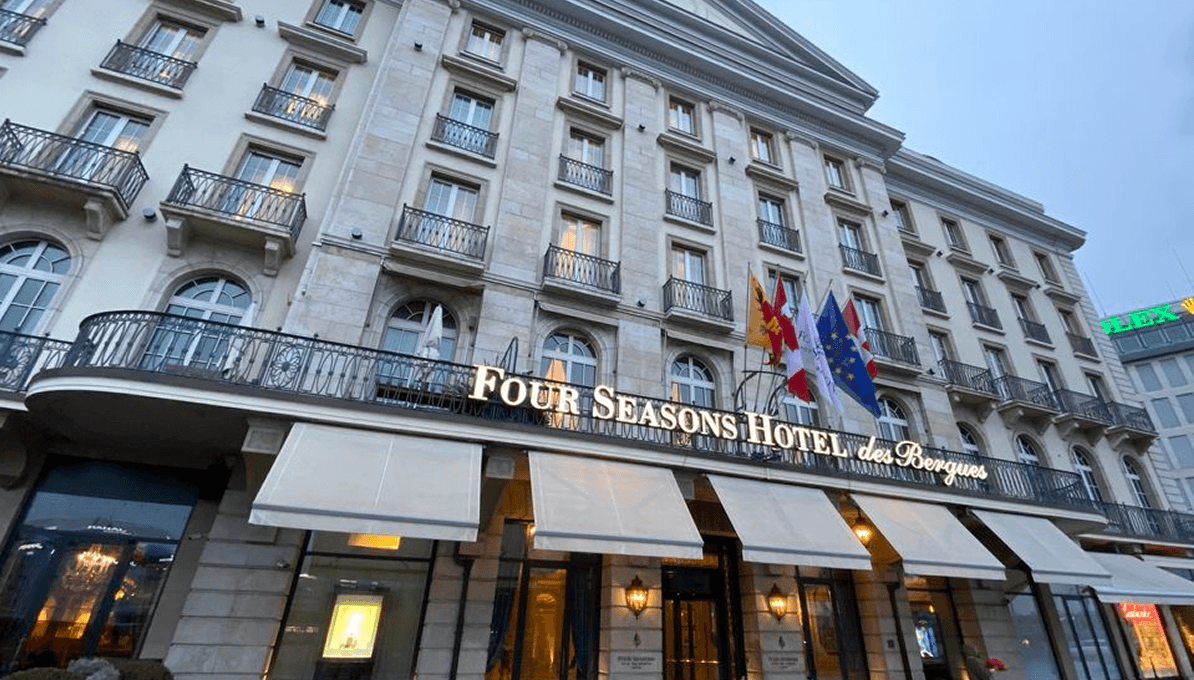
It has become a must-attend event in Geneva. Naef hosted its now-famous “The Wealth Report 2026” conference at the Hôtel des Bergues, the Four Seasons in Geneva, bringing together key players in the luxury real estate and wealth management sectors for an evening. The SIZE teams made a point of attending this event, which each year analyzes major trends in global wealth through Knight Frank’s highly anticipated report.
Every year, the British firm Knight Frank publishes its renowned Wealth Report, a sort of barometer of global wealth. The 2026 edition, which marks the report’s 20th anniversary, paints a picture of a world where great fortunes continue to grow at breakneck speed, but where they must also navigate an increasingly unstable geopolitical landscape. Here are the key takeaways the SIZE team gathered from the event.
More and more millionaires—and faster than ever before
The most striking figure in this report is the pace of wealth creation. According to Knight Frank’s model, the global population of UHNWIs—the so-called “ultra-rich,” with assets exceeding $30 million—surpassed 713,000 people in 2026. That’s nearly a third more than five years ago. In practical terms, this means that approximately 89 new individuals cross this threshold every day, somewhere in the world.
The United States remains far ahead in this trend, accounting for more than 40% of the new fortunes created recently. But the report also highlights the rising influence of India and China, two countries that are now driving this expansion. In five years, for example, the number of dollar millionaires in India has surged by more than 60%.
Wealth that is increasingly concentrated... and increasingly mobile
The report revisits a concept he himself had highlighted in its first edition in 2007: “plutonomy,” the idea that a minority of very wealthy individuals exerts a disproportionate influence on the global economy.
Twenty years later, the evidence is clear: this phenomenon has not abated; in fact, it has intensified, driven by technology and the growing financialization of economies.
But this concentration of wealth is accompanied by another phenomenon: increased mobility.
Between rising wealth taxes in some countries and a political climate that is sometimes hostile to the ultra-wealthy, more and more wealthy investors are adopting a lifestyle that Knight Frank describes as “ultra-mobile.”
Many now spend only a few weeks a year at each of their residences, preferring to maintain multiple bases across several global hubs. London and New York retain their status as key financial centers, but Dubai, Singapore, and Hong Kong are gaining ground as new crossroads of global wealth.
The luxury real estate market remains resilient, driven by scarcity
In the real estate market, the findings are quite surprising: despite high interest rates and a challenging economic climate, luxury residential real estate prices have continued to climb, with an average increase of 3.2% in 2025 according to the report’s flagship index, the PIRI 100.
The Middle East is clearly performing well, with a 9.4% increase, driven in particular by Dubai (+25%). But the real surprise comes from Tokyo, where prime real estate prices have skyrocketed by nearly 60%, a result of a weak yen that is attracting foreign buyers.
This resilience of the luxury market can be partly explained by a chronic shortage of “turnkey” properties and by the growing appetite for branded residences that are fully managed and ready to move into—a compelling argument for owners who are spending less and less time at home.
Translated with DeepL.com (free version)
Luxury is changing its face
Another key trend highlighted in the report is that luxury consumption patterns are changing, particularly among younger high-net-worth individuals. There is a gradual shift away from consumption focused on social status—watches, cars, designer bags—toward a pursuit of experiences, well-being, and exclusivity. This “economy of transformation,” as the report calls it, is driving luxury brands, private clubs, and hoteliers to offer tailored experiences rather than mere products.
When it comes to collectibles, the report notes an interesting repositioning: while the “mass-market” luxury sector is losing customers (approximately 70 million fewer consumers in three years, due to prices that have become too high), the art and collectibles markets—watches, wines, classic cars, and even artists’ prints—are rebounding, driven by buyers seeking authenticity and rarity rather than ostentation.
What this means for investors
The central message of this anniversary edition is clear: the stable and predictable world that shaped the report’s first twenty years—under control inflation, abundant liquidity, and ongoing globalization—has given way to a far more fragmented environment.
Amid geopolitical tensions, persistent inflation, and record public debt, high-net-worth individuals must now contend with greater uncertainty.
In this context, the report identifies scarcity as the true driver of future value: historic estates, hard-to-replicate waterfront properties, and assets with a genuine provenance. Rather than sheer opulence, it is the combination of scarcity, privacy, and resilience that now seems to guide the choices of the most discerning investors.
An evening full of meaningful exchanges for the SIZE team
Beyond the numbers, this conference organized by Naef at the Hôtel des Bergues was above all an opportunity to network with other professionals in the luxury real estate and wealth management sectors who were in Geneva.
For the SIZE team, this type of event confirms what we’ve observed on the ground: demand for rare, well-located properties with a rich history shows no signs of waning—quite the contrary. These are trends we monitor closely, day in and day out, as we provide recommendations to our clients.

Misam GHADIALI
Chairman